Incoming inspection
Base bars are checked for grade, size, straightness and surface condition. The mill test certificate is verified before the bars enter the line.
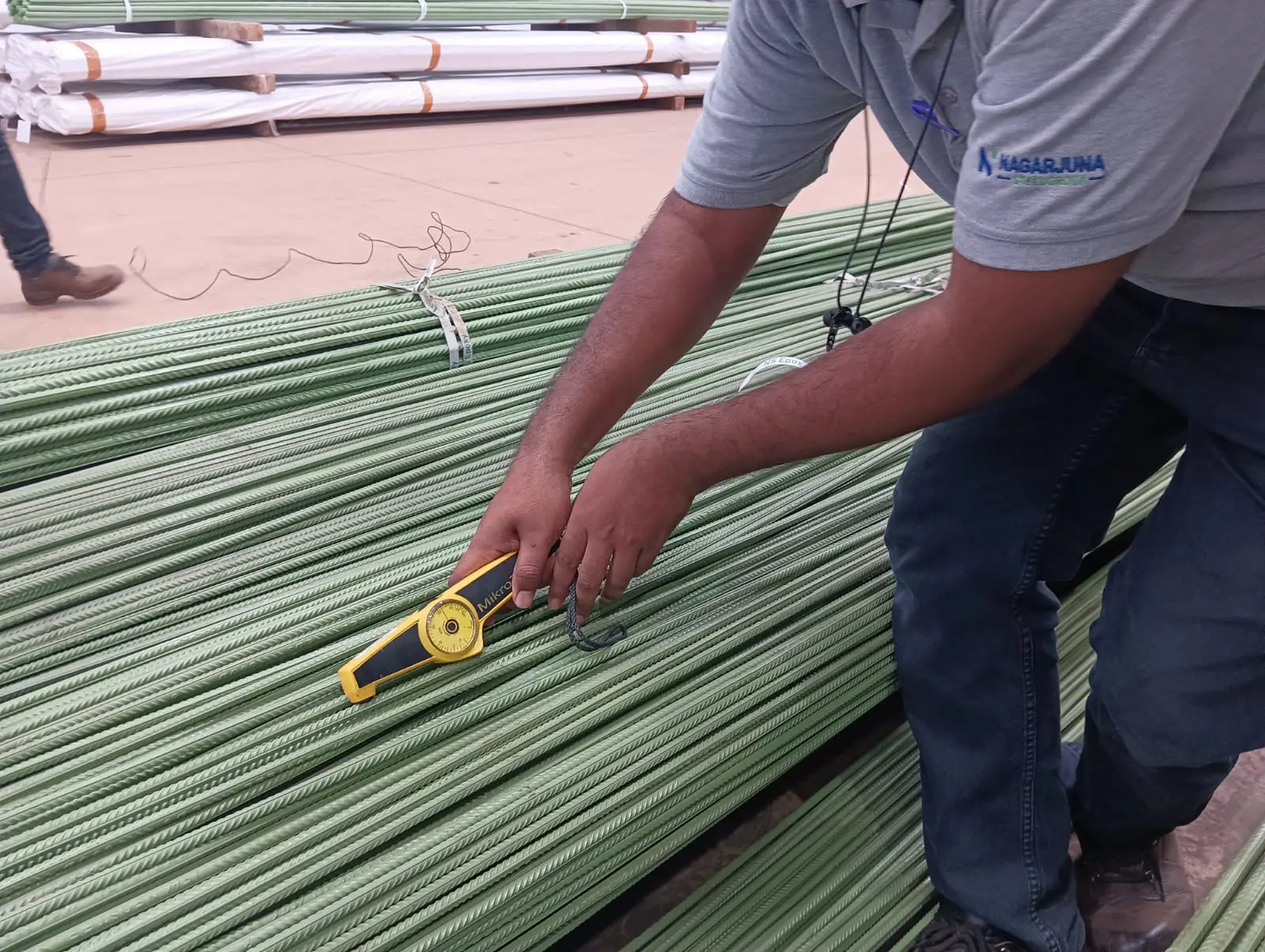
Our PLC-controlled fusion bonded epoxy line takes each bar from inspection to dispatch in one continuous run. Every bar is coated to IS 13620 and ASTM A775, and tested before it leaves the plant.
One continuous coating sequence. Each stage is controlled and recorded before the next begins.
Base bars are checked for grade, size, straightness and surface condition. The mill test certificate is verified before the bars enter the line.
Shot and grit blasting strips mill scale and rust down to clean metal and creates the profile the coating grips. Dust is cleared before heating.
Bars are heated uniformly to 200–250°C, the temperature at which epoxy powder fuses.
Electrostatically charged epoxy powder is sprayed onto the hot bar. It melts, flows and cures into a continuous film of 200 to 300 microns.
A water quench sets the coating so bars can be handled without marking.
Every bar in the lot is checked for coating thickness, holidays (pinholes), flexibility (bend test) and adhesion. Results are recorded against the batch.
Bars are bundled with padded supports and coated ties, lifted with nylon slings, and sent in covered trucks with a test report for each consignment.
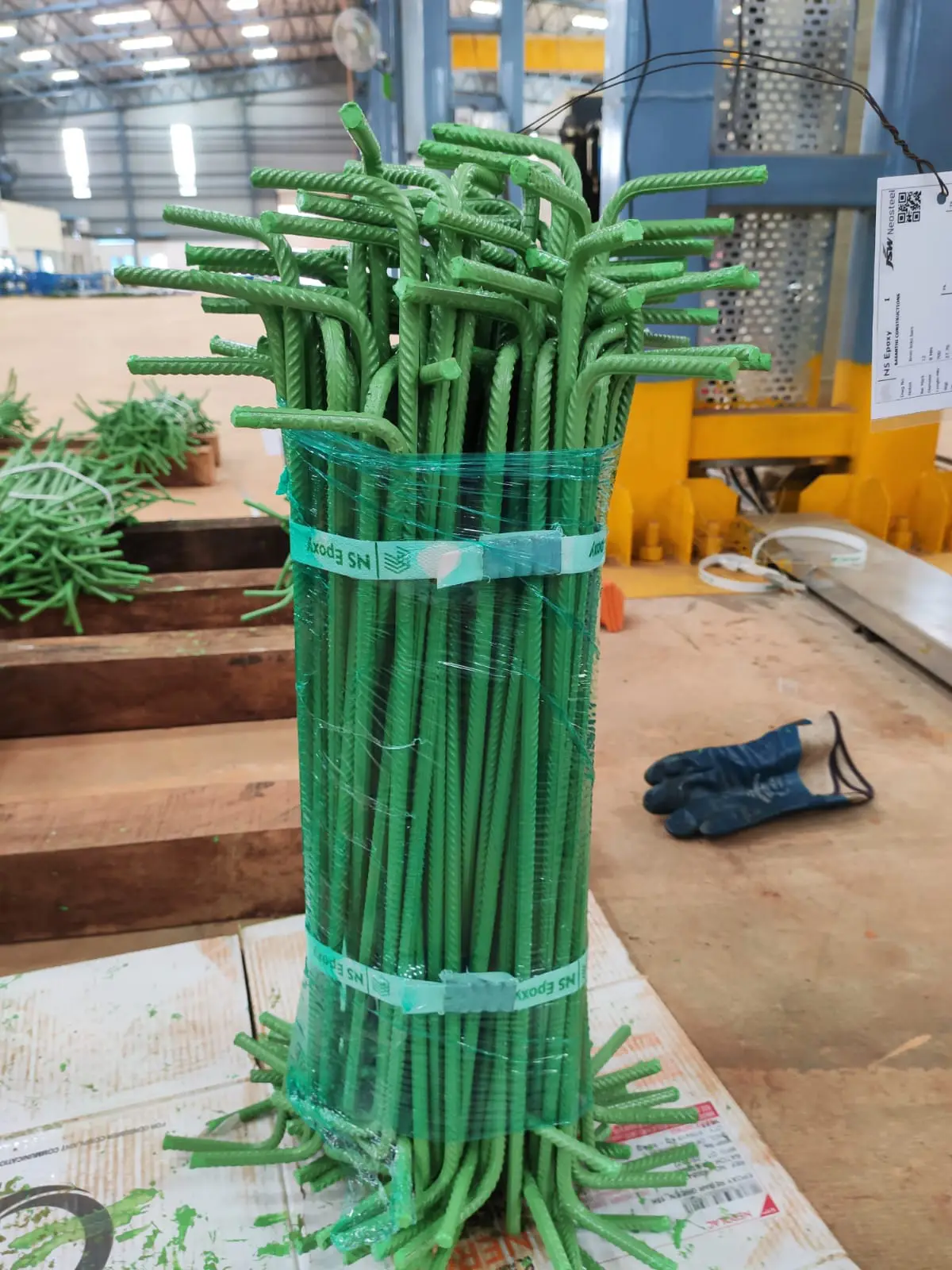
Coating thickness, holiday, bend and adhesion checks on every lot — so the barrier you specify is the barrier that arrives on site.
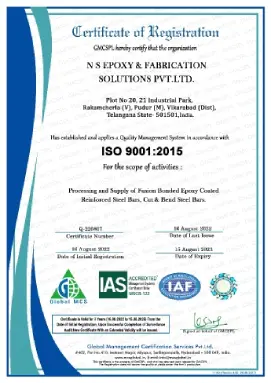
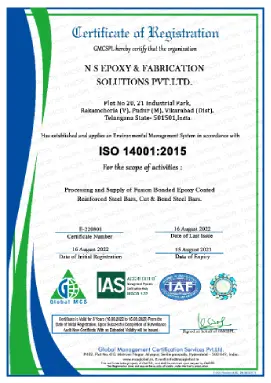
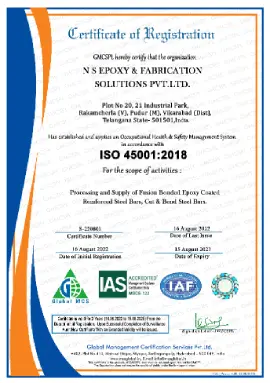
Coating to IS 13620 and ASTM A775, backed by our ISO management systems. Click a certificate to open the gallery.
Ask for a recent consignment report and our coating specification — thickness, holiday, bend and adhesion as recorded for the lot.