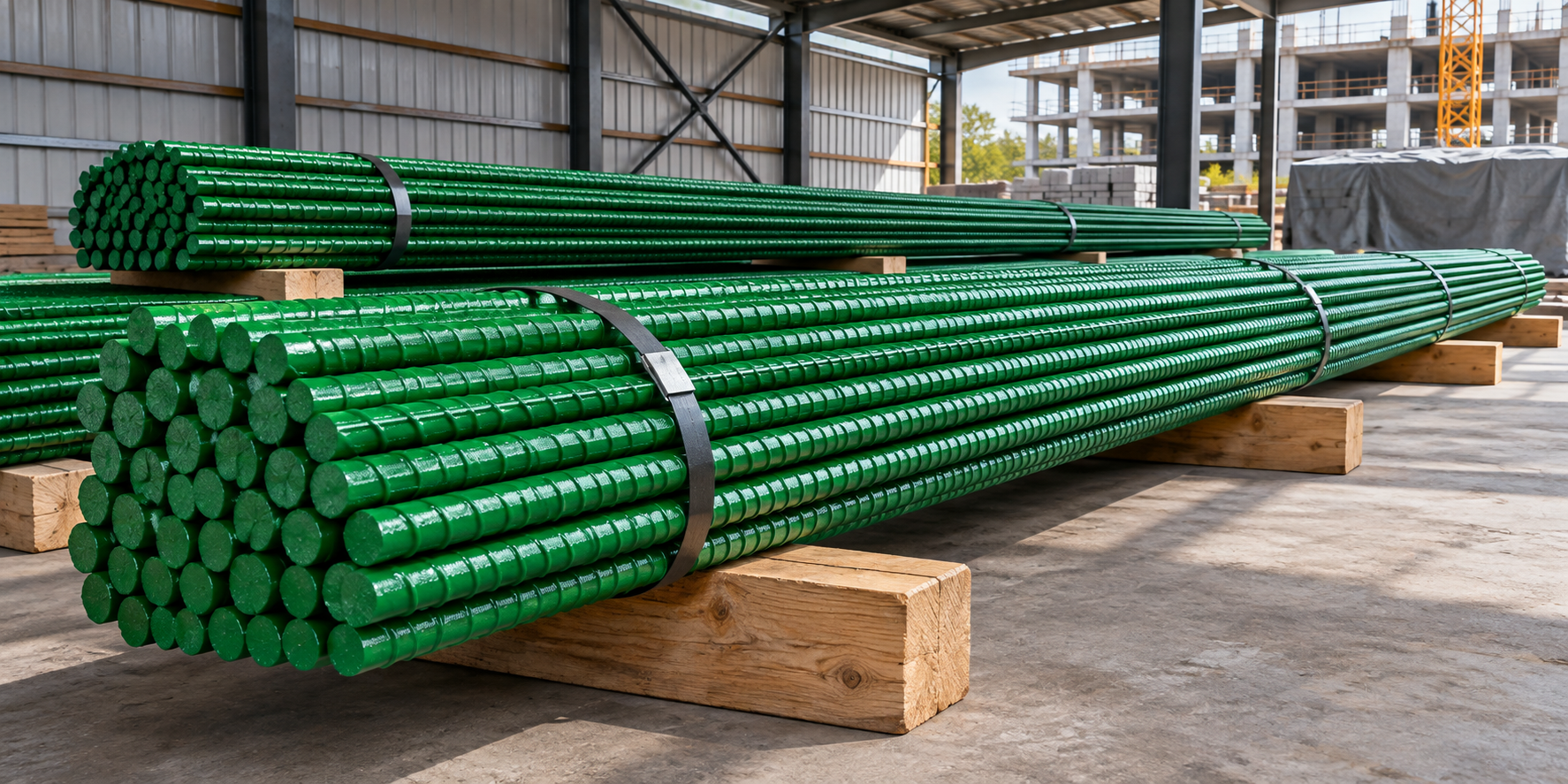
Epoxy coated TMT bars are used widely in construction projects that need protection from corrosion. The bars are usually covered with an epoxy layering which prevents rust and provides extra durability for concrete structures. They are used particularly in big contraction projects like bridges, dams, marine structures, and other projects where the steel components are exposed to elements of nature.
However, the performance of epoxy coated TMT bars also depends on their quality and the way they are handled, transported and stored at construction sites. Improper handling of the product may damage the protective coating and reduce its ability to resist corrosion. Therefore it becomes important for construction workers, contractors and site engineers to store and handle them properly.
This article talks about the important steps to handle and store epoxy coated TMT bars at construction sites safely and effectively.
EPOXY COATING: DISCOVERING ITS IMPORTANCE
Epoxy coating is a protective layer that is applied to the reinforcement bars to minimize the direct contact between the steel and the corrosive elements. It serves as a barrier against moisture, oxygen, salts and other corrosive materials.
Some of the major benefits of epoxy coated TMT bars are:
- Protection against corrosion
- Longer life span
- Less upkeep
- Enhanced structural durability
- Excellent for harsh environments
The epoxy layer is protective so it is very important to avoid scratches, cracks and other damage to the coating during site works .
CHECK EPOXY COATED TMT BARS ON DELIVERY
Good handling begins with the receipt of material at the construction site. Please inspect the bars before unloading, to make sure that they have been delivered in satisfactory condition.
The site supervisor or quality control team will verify:
- Are the bars supplied in the required specifications and sizes
- If the epoxy coating looks uniform and well applied
- Scratches, cracks, peeling or damaged areas that can be seen
- Whether the bars have been properly protected during transport
- Availability of quality certificates and delivery documents
If you find damage in coatings, it should be recorded and the supplier should be informed. After that, the damaged area can be repaired before it is put to use.
FOLLOW PROPER UNLOADING PROCEDURES
Although, unloading in all sense is a pretty straightforward task; yet, it is important to ensure that the bars are handled carefully so that the coating is not damaged at any point during placement.
Unlike standard steel reinforcement bars, epoxy-coated bars need extra precautions to guard the outer coating.
Follow the unloading procedures below:
- Use nylon slings, padded lifting equipment or other appropriate non-damaging lifting accessories
- Do not use steel chains, wire ropes or hooks directly on the coated surface
- Avoid dropping, dragging or throwing the bars when unloading
- Avoid too much bending or friction when lifting bundles
- Bars should not rub against each other or rough surfaces
- Use trained workers and proper lifting equipment to safely handle material
If it is unloaded properly, the risk of damaging the coating decreases and the quality of the reinforcing material is maintained.
STORE EPOXY COATED TMT BARS AT PROPER PLACE
It is very important to store them properly to protect epoxy coated TMT bars from any physical damage and exposure to the environment. The construction site must have a storage area where the reinforcement bars are kept safely until they are needed.
Here are some guidelines for storage:
- Choose a dry and clean area
- Maintain bars above ground level
- Apply protective covers
- Different sizes separated
- Do not overcrowd
PROPER STACKING TECHNIQUES
The condition of bars is directly affected by the stacking of epoxy coated TMT bars. Incorrect stacking may result in scratches, pressure marks and bending. Another advantage of this is that it will allow users to identify the items and put them to use as needed.
- Wooden blocks or padded supports between bars and ground
- Keep the supports evenly spaced so they do not sag or bend
- No sharp edges or rough materials that may come into contact with the coating
- When arranging bundles, do not slide one bar over another
- Use separators or protective padding as needed
- Stack the bars in a stable and orderly manner to avoid accidental movement
BE CAREFUL WHEN CUTTING AND BENDING HANDLE BARS
TMT bars with epoxy coating are usually required to be cut and bent as per structural drawings and construction requirements. These actions should be performed carefully so as not to damage the protective layer.
Some important precautions are as follows:
- Use well-maintained cutting and bending equipment
- Ensure that the machines do not have damaged or sharp contact surfaces
- Do not bend over unnecessarily or straighten up repeatedly
- Follow the approved bending schedules and project spec.
- Do not use excessive force when cutting/bending operations
- Inspect the coating after fabrication for areas of damage
Any exposed steel or damaged coating shall be repaired with an approved repair system prior to placing the bars in concrete. Follow the coating manufacturer’s recommendations for surface preparation, application and cure.
EXAMINE THE COATING PRIOR TO CONCRETE PLACEMENT
Inspect the protective coating of epoxy-coated TMT bars immediately before erection to make sure it is in good condition.
The inspection team should be looking for:
- Scratches, cuts, cracks and flaking
- Exposed surfaces of steel
- Damage during cutting, bending or transport
- Damage to coatings around joints and contact points
- Oil, grease, dirt or chemical contamination
FOLLOW SAFETY MEASURES ON CONSTRUCTION SITES
Always make sure that all safety procedures are followed religiously while handling the TMT bars. Deviation for this may lead to avoidable accidents which can cause damage to assets or injure personnel working in the area.
Important safety measures include:
- Supply gloves, safety shoes, helmets and any other necessary protective equipment
- Use proper lifting gear for heavy bundles
- Keep storage areas neat and free of obstructions
- Ensure stacked bars are stable and securely fixed
- Train workers in safe lifting, unloading, and handling procedures
- Follow site safety rules when cutting, bending and installing
These precautions prevent accidents in the workplace and protect the quality of materials of construction.
MAINTAIN PROPER RECORDS AND FOLLOW MANUFACTURER RECOMMENDATIONS
Proper records help construction teams to keep a track of condition and movement of epoxy coated TMT bars.
Maintain records of:
- Material supply and inspection reports
- Stock quantities and storage locations
- Cutting and bending
- Damage and repair of coatings
- Last inspection before concrete pour
CONCLUSION
The epoxy-coated TMT bars are very important for the corrosion resistance and durability of the reinforced concrete structures. All things considered, its performance largely depends on how the item is handled during transportation, handling, storage, and installation.
To avoid coating damage, construction companies should train their workers and follow manufacturer’s recommendations. Epoxy coated TMT bars, if handled and stored properly, can provide reliable corrosion protection and ensure the long term durability of infrastructure projects.